
Salaam,
On July 18, 2025, the GENIUS Act (Guiding and Establishing National Innovation for US Stablecoin) was signed into U.S. law. It marks a watershed moment in the evolution of digital finance finally offering clear federal guidelines for stablecoin issuers, mandating reserve backing, and laying a foundation for stable, secure, blockchain-based payment systems in the U.S. This act not only sets the tone for other areas of crypto regulation but also signals growing global recognition of digital assets as part of the future of finance.
Africa isn’t sitting still either. Nigeria has made crypto legal and placed its oversight under the SEC. South Africa is licensing crypto service providers under its Financial Sector Conduct Authority. And Kenya is currently in the process of drafting a regulatory framework that would give digital assets legitimacy in its financial ecosystem. One by one, countries across the continent are signaling readiness to not only participate in this transformationbut to shape it.
The PAPSS Card: A Visible Step Forward
Just weeks ago, Africa welcomed a major leap: the launch of the PAPSS Card, the first-ever pan-African payment card scheme. Backed by Afreximbank, the Pan-African Payment and Settlement System (PAPSS), and Mercury Payment Services, this new card aims to simplify and lower the cost of cross-border retail payments.
Currently, most card payments in Africa are routed through international systems, resulting in higher fees, slower settlement times, and the outsourcing of critical financial data. The PAPSS Card is Africa’s bold step toward reclaiming its own financial narrative.
While this is a first on a continental scale, we’ve seen successful regional schemes before: Umoja Switch and TemboCard in Tanzania, and Verve by Interswitch in Nigeria, to name a few. Yet, the growing number of domestic and international card schemes also signals another truth – a fragmented financial infrastructure.
But a card is just the surface. Beneath it lies a vast and intricate web — the orchestration layers that move money domestically and globally. For decades, these systems have operated in isolation, hampering value exchange and imposing a heavy burden on cross-border payments. Sluggish settlements and inflated transaction costs are symptoms of these siloed, legacy systems.
Rethinking Infrastructure: From Payments to Value Exchange
So, what if we could leapfrog ahead — beyond today’s instant payment switches, stablecoins, and interoperability buzzwords — and imagine a truly interconnected financial infrastructure? A system where not just money, but value flows freely across borders and capital markets. That future is closer than we think.
That’s the promise of Finternet — a vision for the next evolution of financial infrastructure.
What is the Finternet?
Finternet is a groundbreaking approach to unifying global financial institutions using tokenization and unified ledger architecture. This architecture enables near-instant, low-cost, high-trust transactions — designed to serve both enterprises and everyday users.
At its core is tokenization, the process of converting real-world assets into programmable digital tokens. This opens up a world of opportunity: from seamless trading of stocks and bonds to insurance settlements and cross-border investments — all on a globally interoperable financial layer.
For Africa, Finternet offers a vision of true interoperability — integrating fragmented national systems into a single, cohesive financial fabric. This could catalyze intra-African trade, long hampered by weak integration, and empower the continent to capture more value within its borders.
The Building Blocks Are Already Here
We now have the tools: blockchain-based ledgers, emerging legal frameworks for digital assets, and accomplished pilot projects across regions. The question is no longer if but how fast we can move. What will it take to realize a truly African and globally integrated financial future?
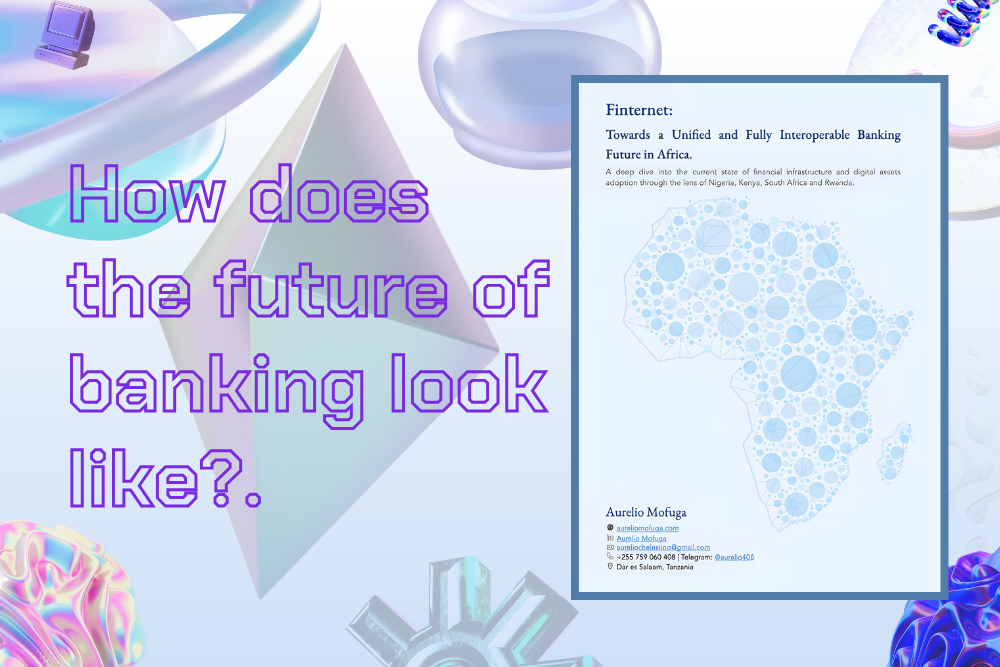
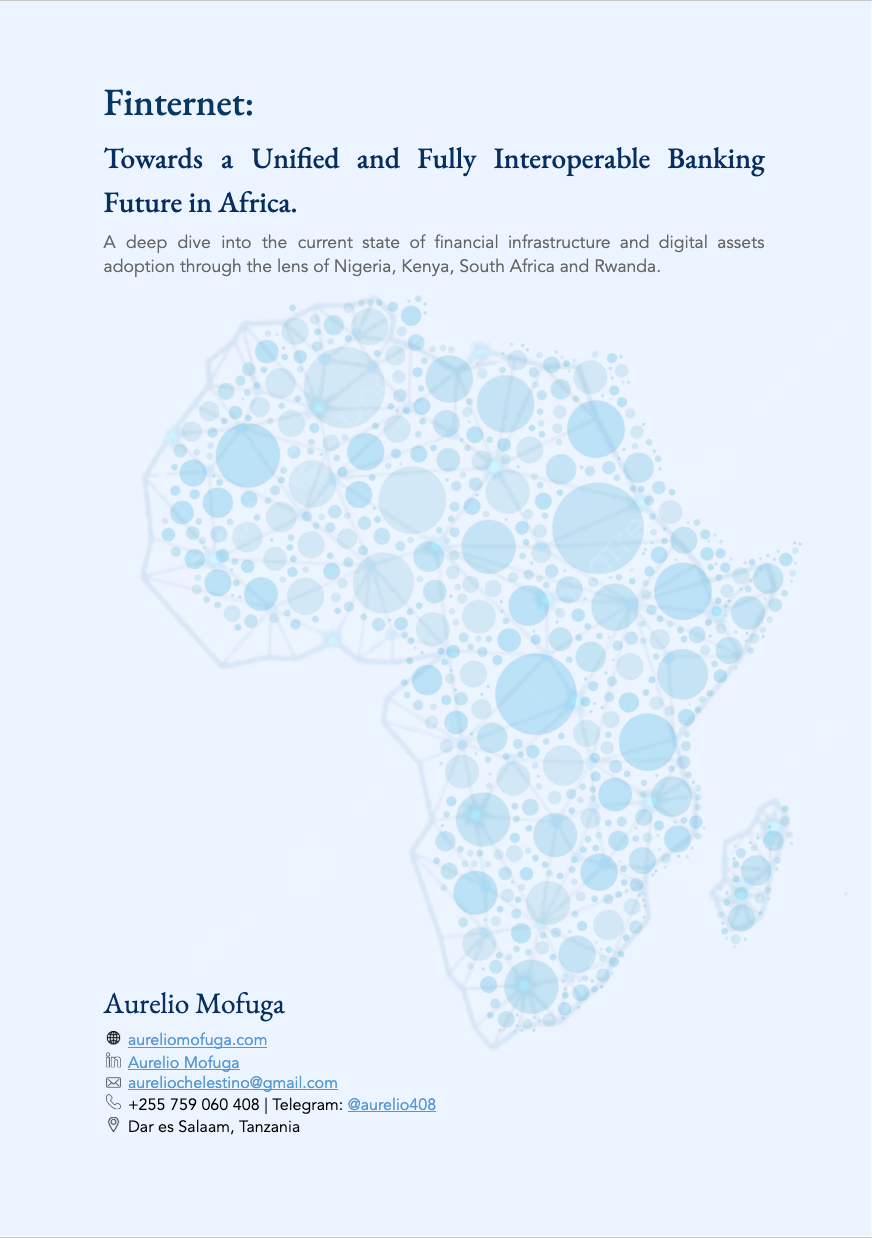
Read more about the finternet report here: Final_ Finternet_ Towards Unified Banking in Africa
Leave a Reply